
We used human genetics, brain biology, and drug databases to go genome-powered drug shopping for new opioid use disorder treatments…without inventing new drugs.
🧠💊 How we went drug-shopping for opioid addiction… using genomes
Opioid use disorder (OUD) has few effective medications, in part because psychiatric drug development is slow and costly. In this study, we took a different approach by asking whether existing FDA-approved drugs could be repurposed for OUD using human biology as our guide. We integrated large-scale human genetic data (GWAS), post-mortem human brain gene expression, and protein interaction networks to identify genes consistently implicated in OUD risk and neurobiology.
We then matched those biologically supported genes to known drug targets using multiple drug-repurposing databases, prioritizing compounds with convergent evidence while filtering out non-specific or well-established opioid targets. This integrative, genome-driven framework identified a refined set of candidate drugs and demonstrates how human genomics can directly inform translational discovery for OUD treatment, without starting drug development from scratch.
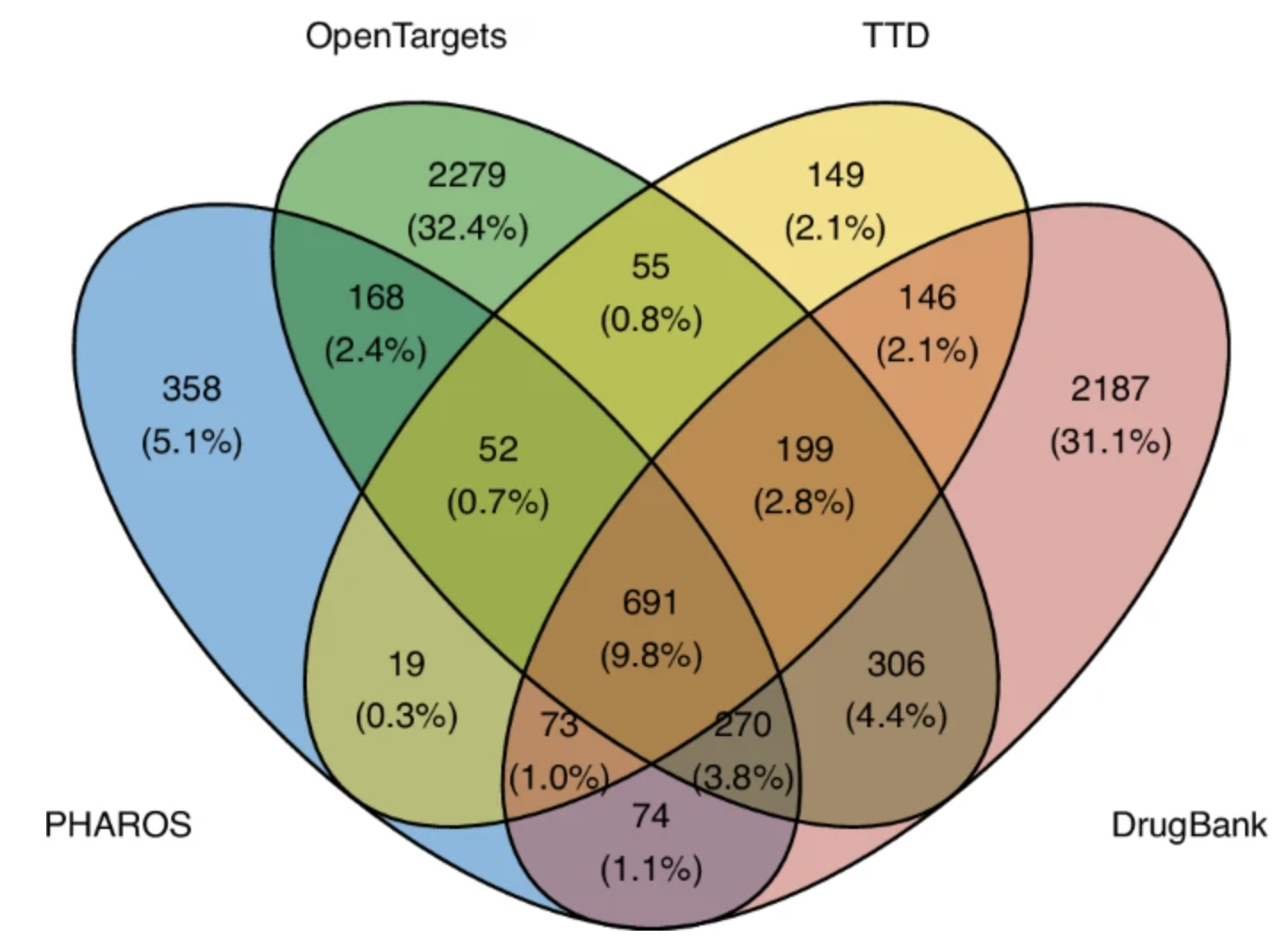
Venn diagram illustrating the overlap and uniqueness of compounds reported across the four drug databases including Pharos (blue n = 1705), Open Targets (green, n = 4020), TTD (yellow, n = 1384) and DrugBank (red, n = 3946).

Size of the dot represents the number of drugs that target the gene as listed in the Open Targets drug repurposing database. Red lines are FDR at 5% (solid), 10% (dashed), 20% (dotted) and 40% (dot-dash).